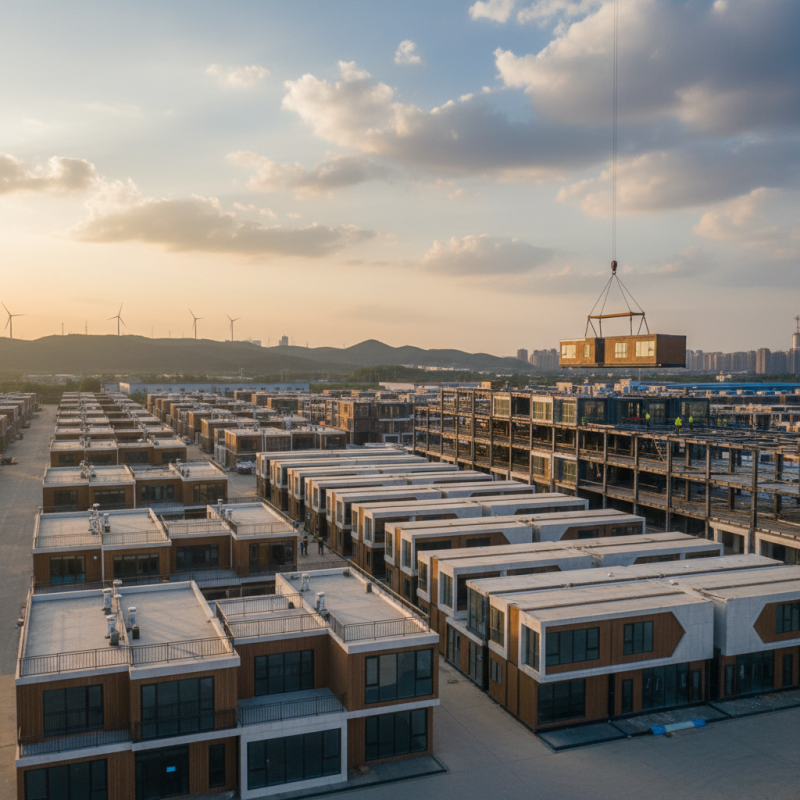
China Best Modular Construction Solutions for Global Buyers?
In recent years, Modular Construction has gained significant traction worldwide. This method offers flexible, efficient, and sustainable building solutions. China has emerged as a leader in this field. Their modular systems provide innovative designs and swift construction times.
Many global buyers are seeking these advanced solutions. They want to reduce costs and improve project timelines. However, challenges remain in quality control and local regulations. Not all modular designs meet international standards. Therefore, buyers must thoroughly research potential partners.
China's modular construction industry showcases a blend of expertise and technology. Their experience in large-scale projects is notable. Yet, potential buyers should approach with caution. Understanding both the benefits and limitations is essential for success.
Overview of Modular Construction in China
Modular construction in China has become increasingly popular. This method builds structures in sections, or modules, that are manufactured off-site. Once completed, these modules are transported to the construction site. This approach significantly reduces construction time and enhances efficiency.
China's modular construction market is diverse. It accommodates residential, commercial, and industrial projects. However, challenges remain. Quality control can be inconsistent. Variations in material quality can lead to structural concerns. Moreover, regulatory hurdles often slow down projects. These factors require a careful evaluation of the supply chain and construction standards.
Despite its growing popularity, modular construction faces criticism. Environmental impacts and waste management are significant issues. Preparing a sustainable plan is essential. Addressing these challenges can enhance the reputation of China's modular construction. Continual assessment and improvement in practices are necessary for long-term success.
Key Benefits of Modular Construction for Global Buyers
Modular construction is transforming the building landscape. This innovative approach offers numerous benefits for global buyers. A key advantage is cost efficiency. By prefabricating elements in a controlled factory setting, costs can be significantly reduced. This method minimizes waste and optimizes labor, leading to better budgets and timelines.
Speed is another critical factor. Modular construction often cuts project completion times by up to 50%. Modules can be built simultaneously while site preparation occurs. However, the reliance on precise planning is crucial. Delays in one area can disrupt the entire schedule. Buyers need to engage experienced partners for seamless coordination.
Quality control is heightened in a factory environment. Each component undergoes rigorous testing to ensure durability and safety. This can lead to higher long-term value. Yet, it’s essential to consider local regulations and standards. Not all modular solutions fit every market. Buyers should conduct thorough research to identify the best solutions for their specific needs. Engaging with local experts can help address unique challenges.
Leading Companies in China's Modular Construction Market
China's modular construction market is rapidly expanding. With a focus on innovation, many leading companies are emerging. They provide efficient building solutions tailored for diverse needs. These firms prioritize sustainable practices and advanced technology. This dedication helps them stand out on the global stage.
Expertise in modular design is evident among top players. They utilize prefabrication methods that reduce waste and time. Clients appreciate the speed of assembly and cost benefits. However, challenges remain within the industry. Quality control can vary, raising concerns for discerning buyers.
Furthermore, international collaboration is growing. Chinese firms aim to enter new markets, bringing their knowledge and skills. Yet, cultural differences and regulations can complicate this process. Companies must adapt to local expectations while maintaining quality. Navigating these complexities is crucial for successful partnerships.
Innovative Technologies in Chinese Modular Building Solutions
China's modular construction industry is rapidly evolving, showcasing innovative technologies that can meet the needs of global buyers. Modular building involves prefabricating sections of a structure in a factory setting. This method cuts down construction time significantly, often by 30-50%.
Advanced technologies are pivotal in the transformation of modular construction. Digital design and Building Information Modeling (BIM) are increasingly utilized. These tools enhance efficiency and provide precise measurements. They also facilitate collaboration between architects, engineers, and builders. Additionally, automation in manufacturing ensures high quality and consistency in building components.
However, challenges remain. The perception of modular buildings as less durable persists in some markets. Educating potential clients on the benefits and strengths of modular construction is crucial. As technology continues to advance, addressing these misconceptions could shape the future of global construction trends.
China Best Modular Construction Solutions for Global Buyers? - Innovative Technologies in Chinese Modular Building Solutions
| Technology Type | Key Features | Application Areas | Sustainability | Estimated Cost (per unit) |
| Light Steel Frame | Durable, lightweight, easy assembly | Residential, commercial, emergency housing | Recyclable materials, energy-efficient | $800 - $1200 |
| Modular Concrete | High strength, fire-resistant, noise-reducing | Hotels, offices, schools | Low CO2 emissions, long lifespan | $1500 - $2500 |
| Prefabricated Timber | Lightweight, aesthetic appeal, quick installation | Cottages, retreats, small offices | Sourced from sustainable forests | $700 - $1000 |
| Shipping Container | Affordable, versatile, portable | Pop-up shops, housing, mobile offices | Recycled materials, energy-efficient retrofitting | $500 - $1500 |
Case Studies: Successful Global Projects Using Chinese Modular Solutions
In recent years, modular construction from China has gained traction globally. A significant aspect is its application in various successful international projects. For example, in the UK, a modular housing development delivered homes in just six months. This approach reduced construction time by 50% compared to traditional methods, as per industry reports. Projects like this highlight efficiency and speed, vital in today’s fast-paced world.
China’s modular solutions have also made a mark in Africa. A school built using prefabricated modules was completed in record time. Local authorities praised the project for enhancing education accessibility. However, challenges persist. Quality control and labor adaptation remain areas needing improvement. The World Bank's data emphasizes that many nations still grapple with integrating modular techniques effectively.
Australia has embraced Chinese modular construction for its residential sector. A project showcased a 25% cost reduction through streamlined operations. Yet, the reliance on imports raises concerns about dependency. It also questions local industries' growth potential. Experts recommend a balanced approach, considering sustainability and local economy impacts. This ongoing journey for modular solutions requires reflection and collaboration among all stakeholders.


 English
 España
 عرب
عرب 简体中文
简体中文