

 English
 España
 عرب
عرب 简体中文
简体中文Top 10 Teak Plywood Suppliers for Global Buyers?
Choosing the right Teak Plywood supplier requires more than comparing prices. Buyers must inspect veneer quality, core construction, moisture resistance, and supply-chain evidence. A sheet may look golden and smooth, yet hide weak joints beneath its surface. That detail can decide whether a yacht interior lasts for years or fails after one wet season.
The Food and Agriculture Organization’s Global Forest Resources Assessment 2020 reports that forests cover about 31% of the world’s land area, or 4.06 billion hectares. Its findings also underline growing pressure on forest resources and the importance of responsible management. ITTO’s Biennial Review and Assessment of the World Timber Situation further shows how tropical timber markets increasingly depend on legality, traceability, and documented sustainability. As forestry expert Patrick B. Durst has cautioned, “Sustainable forest management is not possible without good governance.” The wording is broad, but the lesson fits teak purchasing closely.
This guide examines ten Teak Plywood suppliers serving global buyers. It considers product consistency, certification practices, export experience, technical support, and communication quality. It also looks at practical details, such as sealed edges, balanced panels, formaldehyde documentation, and container-loading protection. No ranking is perfect. Supplier performance can change with mills, seasons, and raw-material sources. Buyers should still request recent test reports, production samples, and chain-of-custody documents before signing contracts. A beautiful sample is useful. Verified evidence is better.
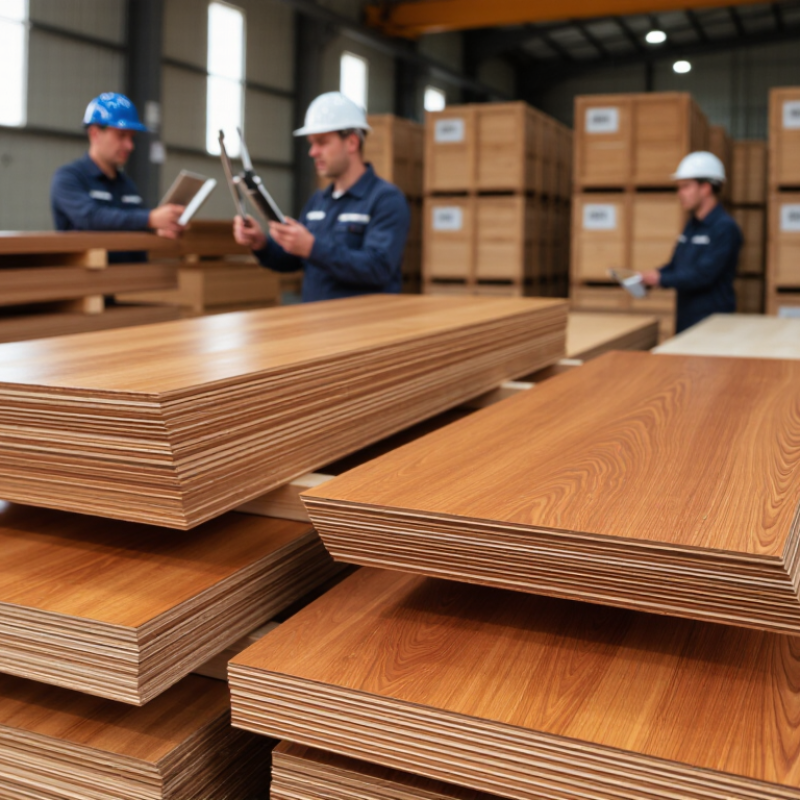
Teak Plywood: Definition, Properties, and Common Applications
Teak plywood is an engineered panel, not a solid teak board. It usually combines thin teak face veneers with a layered core made from other timber. This construction reduces weight and improves panel stability. The visible teak layer provides warm color, distinctive grain, and a smooth surface for furniture or interior design.
Teak contains natural oils, giving it useful resistance to moisture, insects, and surface wear. However, teak plywood is not automatically waterproof. Poor edge sealing can allow water to enter quickly. In practical inspections, check veneer thickness, core gaps, adhesive lines, and panel flatness. Marine interiors, yacht cabinetry, bathroom furniture, wall panels, doors, and sheltered outdoor structures are common applications. Exterior exposure still requires suitable bonding, coatings, and regular maintenance.
Sourcing deserves equal attention. The FAO Global Forest Resources Assessment 2020 reports that forests cover about 31% of global land area, while roughly 420 million hectares disappeared between 1990 and 2020. That figure makes traceability more than a marketing phrase. Buyers should request species documentation, harvest origin, chain-of-custody evidence, and tests for bonding quality. Relevant plywood standards can help verify structural performance, but paperwork alone is never enough. A common mistake is trusting a dark surface as proof of genuine teak. It is not. Independent inspection remains worthwhile, especially for large orders.
Top 10 Teak Plywood Suppliers for Global Buyers? - Teak Plywood: Definition, Properties, and Common Applications
| Rank | Anonymous Supplier Profile | Common Supply Region | Teak Face-Veneer Source | Typical Plywood Construction | Common Thickness | Common Sheet Sizes | Typical Surface Grade | Key Properties | Common Applications | Documents to Request | Indicative MOQ | Indicative Lead Time |
|---|---|---|---|---|---|---|---|---|---|---|---|---|
| 1 | Profile A — Plantation-Teak Decorative Panel Supplier | Southeast Asia | Plantation-grown teak; origin and legality documentation required | Teak face veneer over hardwood or mixed hardwood core | 4–25 mm | 1220 × 2440 mm; custom sizes may be available | AA, AB, or BB depending on knot and color tolerance | Warm appearance Good dimensional stability | Furniture, doors, wall panels, cabinetry, interior joinery | Technical datasheet, veneer-origin record, formaldehyde report, packing list, legality documents | Approx. 1–5 m³ for standard items | Approx. 20–45 days after approval |
| 2 | Profile B — Marine-Grade Teak-Faced Panel Supplier | South and Southeast Asia | Plantation or verified legal teak veneer, subject to project specification | Teak face with waterproof-bonded hardwood or compliant marine plywood core | 6–25 mm | 1220 × 2440 mm; 1250 × 2500 mm in selected mills | Clear face or limited natural defects | Moisture resistant Strong bonding | Boat interiors, yacht joinery, wet-area cabinetry, exterior detailing when properly finished | Bonding standard, glue type, water-resistance test, core-specification sheet, certificate of origin | Approx. 10–30 sheets for stock; larger for production orders | Approx. 25–60 days |
| 3 | Profile C — Furniture-Grade Teak Veneer Supplier | India and South Asia | Plantation teak or legally documented domestic and imported veneer | Teak veneer over poplar, eucalyptus, rubberwood, or mixed hardwood core | 3–18 mm | 1220 × 2440 mm; 1830 × 2440 mm for selected products | Natural grain with filled or open pores | Decorative grain Machinable | Tables, cabinets, bedroom furniture, office interiors, retail fixtures | Face-grade definition, core species, moisture content, emission test, inspection report | Approx. 50–200 sheets | Approx. 15–40 days |
| 4 | Profile D — Export-Oriented Hardwood Plywood Supplier | Vietnam | Imported or plantation-grown teak veneer with traceability varying by order | Multi-ply hardwood core with teak decorative face and back | 5–25 mm | 1220 × 2440 mm; 1250 × 2500 mm | BB/CC for commercial use; higher grades by order | Consistent sizing Export packaging | Furniture components, doors, interior wall cladding, hospitality projects | Product specification, tolerance report, moisture reading, fumigation or ISPM 15 records where applicable | Approx. 1 × 20-foot container for custom production | Approx. 30–60 days including production |
| 5 | Profile E — Low-Emission Interior Panel Supplier | China | Imported teak veneer or plantation teak; documentation must be checked lot by lot | Teak veneer laminated to hardwood, poplar, or eucalyptus plywood | 3–21 mm | 1220 × 2440 mm; customized cutting available | Selected face, natural face, or engineered veneer appearance | Low-emission options Custom processing | Furniture, hotel interiors, doors, decorative partitions, CNC components | Formaldehyde test, VOC data where requested, veneer legality papers, pre-shipment inspection | Approx. 30–100 sheets for standard products | Approx. 20–50 days |
| 6 | Profile F — Premium Architectural Surface Supplier | Indonesia | Plantation-grown teak or verified reclaimed teak, depending on product line | Stable hardwood core with carefully matched teak face veneer | 6–19 mm | 1220 × 2440 mm; 1220 × 3050 mm for selected architectural panels | Book-matched, slip-matched, or quarter-cut appearance | High visual consistency Premium veneer matching | Luxury furniture, feature walls, hospitality interiors, custom millwork | Veneer matching approval, species and origin statement, finish sample, quality-control report | Approx. 20–100 sheets | Approx. 30–75 days |
| 7 | Profile G — Commercial Teak-Faced Plywood Supplier | Malaysia and regional Asian markets | Plantation or imported teak veneer; exact source varies | Commercial hardwood plywood with teak face and back | 4–18 mm | 1220 × 2440 mm | Commercial face with repaired knots or color variation | Cost efficient Broad availability | General furniture, shelving, shopfitting, interior partitions | Core composition, face-grade standard, moisture content, glue-bond test, packing specification | Approx. 1–3 m³ | Approx. 15–45 days |
| 8 | Profile H — European Project-Import Supplier | European distribution hubs | Imported teak veneer sourced from approved overseas mills | Pre-imported plywood panels with teak veneer or made-to-order overlay | 6–25 mm | 1220 × 2440 mm; project-specific formats may be available | Architectural, furniture, or commercial grade | Shorter regional delivery Project documentation | Interior architecture, bespoke furniture, retail and hotel projects | Chain-of-custody claim if applicable, product declaration, emission class, origin and customs documents | Approx. 10–50 sheets from stock; project orders vary | Approx. 1–8 weeks from stock or 8–16 weeks for production |
| 9 | Profile I — North American Specialty Importer | North America | Imported plantation or legally documented teak veneer | Imported hardwood plywood with teak face veneer, subject to availability | 6–19 mm | 4 × 8 ft; metric sizes available by special order | Select, natural, or shop grade | Local stock potential Project cutting services | Marine interiors, furniture, cabinetry, custom architectural work | Country of origin, TSCA Title VI or applicable emission documentation, species declaration, inspection record | Approx. 10–100 sheets from stock | Approx. 1–6 weeks from stock; longer for imports |
| 10 | Profile J — Custom Reclaimed-Teak Panel Supplier | Asia, Europe, and selected global project markets | Reclaimed teak from documented buildings, boats, or other legal sources | Reconstituted or laminated reclaimed teak face over a plywood substrate | 8–25 mm | Custom sizes; 1220 × 2440 mm may be possible depending on raw material | Natural variation, knots, color changes, and repaired areas accepted | Distinctive character Material variation | Feature walls, tabletops, hospitality interiors, decorative doors, bespoke furniture | Reclaimed-material declaration, treatment record, moisture content, substrate specification, sample approval | Approx. 10–50 sheets or project-based quantities | Approx. 30–90 days |
-
- about us
- About Us
- Qualification
- Privacy
-
- Packaging products
- Hot Sale
- Outdoor Sofa Sets
- Outdoor Dining Sets
- Outdoor Loungers/Sunbeds
- Swing Chairs
- Single Chair

