

 English
 España
 عرب
عرب 简体中文
简体中文China Top 10 Light Teak Grain Wooden Venetian Blinds Suppliers
Choosing the right supplier for Light Teak Grain Wooden Venetian Blinds requires more than attractive catalog images. This guide examines ten China-based suppliers through practical criteria, including material quality, manufacturing experience, customization capacity, export communication, and after-sales support. The focus is not only on price. Reliable blinds should show consistent slat coloring, smooth edges, accurate tilt control, and a stable protective finish.
Details matter. A supplier may offer 50 mm slats, matching pelmets, cordless options, and motorized systems. However, these features deserve verification before purchase. Buyers should request wood samples, coating specifications, packaging photos, and recent production examples. Teak-inspired grain can look warm beside cream walls and natural flooring, yet screen images may exaggerate its color. Sample approval remains essential.
This introduction also considers factory audits, quality-control procedures, stated certifications, production lead times, and international shipping experience. These indicators support a more dependable supplier assessment, although they cannot replace direct communication or independent inspection. A polished website proves little.
A ranking can still be imperfect. Supplier capabilities may change, and product names may describe different wood species or finishes. For that reason, readers should compare quotations carefully and confirm moisture resistance, warranty terms, installation guidance, and replacement-part availability. The best choice depends on room conditions, project scale, budget, and required customization. With clear evidence and realistic expectations, this list can help importers, designers, contractors, and homeowners narrow their options with greater confidence.
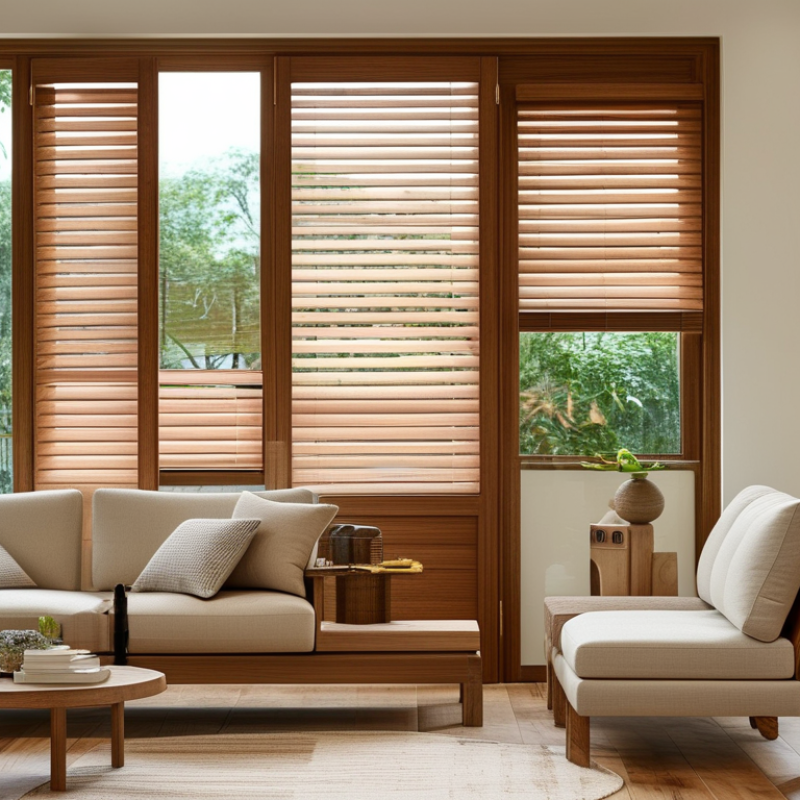
Definition and Features of Light Teak Grain Wooden Venetian Blinds
Light teak grain wooden Venetian blinds are window coverings made with wooden slats finished to resemble the warm, pale-brown pattern of teak. The finish does not always mean the slats are solid teak. They may use basswood, paulownia, or engineered wood with a printed or stained surface. This distinction matters when comparing suppliers in China. A reliable specification should identify the wood type, slat thickness, coating method, and moisture resistance.
Their main feature is controlled daylight. By tilting the slats, users can soften glare while keeping a view outside. Wider slats create a cleaner appearance and require fewer ladder cords. Narrower slats suit smaller windows but may collect dust more quickly. The light teak tone also makes rooms feel brighter, especially beside white walls, linen curtains, or natural stone surfaces. It is a calm finish.
Practical quality depends on more than appearance. Straight slats, even spacing, smooth lifting, and stable end caps are important inspection points. A careful installer should check window depth before ordering, because a beautiful blind can still fit poorly. These blinds are not maintenance-free. Wood may react to high humidity, and strong sunlight can slowly change the finish. Regular dusting with a dry cloth helps, while excessive water should be avoided. Some product claims sound impressive, yet supplier samples and documented test details are still necessary before making a purchasing decision.
China Top 10 Light Teak Grain Wooden Venetian Blinds Suppliers - Definition and Features of Light Teak Grain Wooden Venetian Blinds
| No. | Data Dimension | Typical Specification or Fact | Definition, Feature, or Supplier Evaluation Point |
|---|---|---|---|
| 1 | Product definition | Horizontal wooden blinds made with real wood slats and a light teak-style grain appearance | Light teak grain normally describes a warm beige, honey, or pale brown finish with visible wood texture. The appearance may be created with natural teak-toned wood, stained wood, or a printed grain finish, so material disclosure should be requested. |
| 2 | Common slat widths | Approximately 25 mm, 35 mm, 50 mm, and 63 mm | Slat width affects the visual scale, stack height, light control, and view-through effect. A 50 mm slat is a widely used size for residential and commercial wooden Venetian blinds. |
| 3 | Wood material options | Basswood, paulownia, poplar, bamboo, or other kiln-dried wood species | Wood species influence weight, grain character, stability, and price. A responsible supplier should identify the species, moisture condition, coating system, and whether the slat is solid wood or engineered material. |
| 4 | Light teak color range | Pale tan to honey brown, commonly with a matte or satin surface | Color consistency should be checked against an approved physical sample. Natural wood contains variation in grain, knots, and tone, so minor differences between production batches are normal. |
| 5 | Light-control function | Adjustable horizontal slats provide filtered light, privacy, and directional shading | Tilting the slats changes the amount and direction of daylight. Wooden blinds reduce glare and provide privacy, but they are not normally a complete blackout solution unless combined with a suitable room-darkening system. |
| 6 | Operating systems | Cord-and-cleat, cord lock, wand tilt, chain tilt, or motorized tilt options | The operating system should match the window size, use frequency, and local safety requirements. Cordless and motorized designs can reduce exposed operating cords and are often preferred for homes with children or pets. |
| 7 | Headrail and components | Metal or wood-wrapped headrail with ladders, cords, tilt mechanism, brackets, and valance | A supplier quotation should list the headrail material, component finish, mounting brackets, valance style, and included hardware. These details affect installation quality and the finished appearance. |
| 8 | Moisture suitability | Best for dry indoor areas; use caution in bathrooms, kitchens, and high-humidity locations | Natural wood can expand, contract, warp, or develop coating problems when exposed to repeated moisture. Suppliers should state the recommended indoor environment and cleaning limitations. |
| 9 | Surface treatment | Water-based paint, stain, clear lacquer, or protective topcoat | The finish affects color depth, grain visibility, cleanability, and resistance to scratching or fading. Request information about coating uniformity, odor, curing, and applicable indoor air-quality requirements. |
| 10 | Supplier quality checkpoints | Material traceability, dimensional accuracy, operating-cycle testing, packaging, and inspection records | A reliable supplier should be able to provide pre-production samples, measurement tolerances, color references, installation instructions, inspection procedures, and export packaging details without relying only on product photographs. |
-
- about us
- About Us
- Qualification
- Privacy
-
- Packaging products
- Hot Sale
- Outdoor Sofa Sets
- Outdoor Dining Sets
- Outdoor Loungers/Sunbeds
- Swing Chairs
- Single Chair

