Top 5 Tips for Choosing the Best Tracked Flail Mower
Choosing the right Tracked Flail Mower can seem daunting. With so many options available, it’s crucial to focus on key aspects that enhance reliability and efficiency. A tracked flail mower offers unique advantages, especially for varied terrains and heavy vegetation. It is essential to understand these machines' features and what suits your specific needs.
When considering a Tracked Flail Mower, think about the power source, cutting width, and maneuverability. Each feature plays a significant role in performance. User experience can vary, highlighting the need for thorough research. Real-world feedback helps in discerning quality and durability.
Moreover, cost can significantly influence your choice. However, it's not just about the initial investment. Consider long-term costs, including maintenance and potential repairs. Quality should never be compromised for price. Awareness of these factors will lead you toward making a more informed decision about your next tracked flail mower.
Understanding Your Mowing Needs: Terrain and Vegetation Considerations
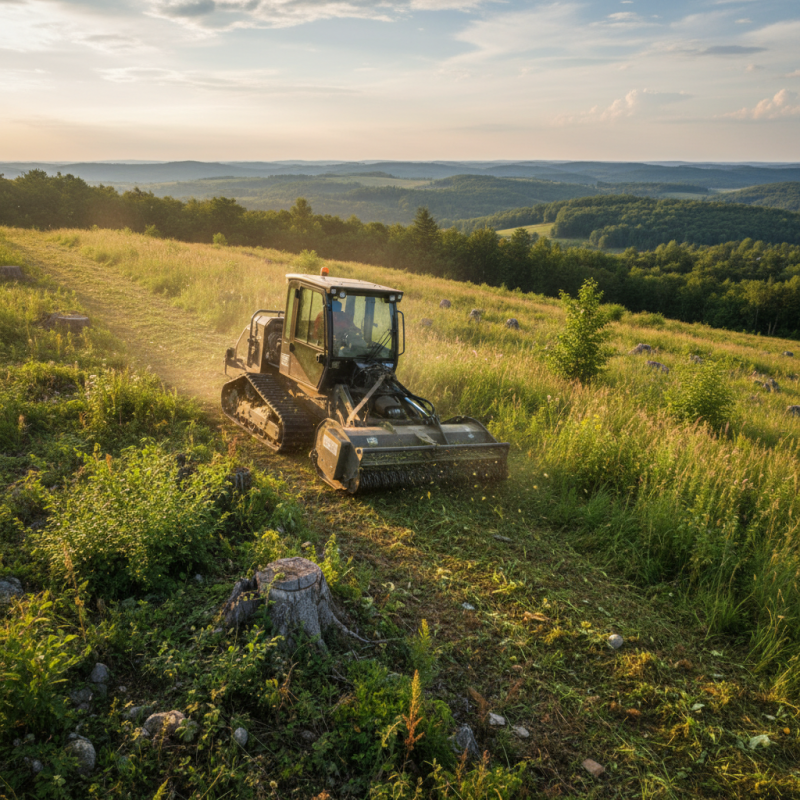
Understanding your mowing needs is crucial before selecting a tracked flail mower. The type of terrain plays a significant role. Are you dealing with hilly fields or flat gardens? Hilly terrains require mowers with superior traction and stability. These mowers should handle steep slopes without tipping. In contrast, flat areas allow for more versatility in mower choice.
Vegetation types also impact your decision. Thick brush demands robust cutting tools. A flail mower with heavy-duty blades can handle dense growth effectively. If you only manage grass and light weeds, lighter models might suffice. However, don’t underestimate the importance of a dependable machine. Choosing poorly might lead to frustration and repeated repairs.
It’s vital to assess your skills and comfort with machinery. If you’re a novice, a complicated mower can be daunting. Look for user-friendly options to build your confidence. Reflect on your mowing habits. Frequent use might require a more durable mower, while occasional mowing allows for simpler choices. Take the time to analyze your unique requirements carefully. Making impulsive decisions can lead to regret later.
Evaluating Engine Power and Performance for Effective Mowing
When choosing a tracked flail mower, engine power and performance are critical factors. A robust engine ensures that the mower can tackle tough terrains and thick grass. Power ratings usually range from 15 to 30 horsepower. Evaluating the horsepower helps you determine how efficiently the mower can operate on uneven ground. More horsepower generally means better performance, but it can also mean increased fuel consumption.
Mowing performance can also depend on engine type and design. Some engines feature advanced cooling systems that allow for longer usage periods. Performance often fluctuates under different conditions. Consider how the mower performs in wet or dense foliage. Often, users overlook the importance of engine maintenance, which can impact long-term efficiency. Regular checks can help maintain optimal functioning, but they require diligence.
Noise levels and vibration can influence your experience too. A powerful engine could mean louder operation, which might be bothersome. Conversely, a quieter engine might sacrifice some power. Finding a balance between noise and performance is key. Understanding these nuances can help you make a more informed choice.
Top 5 Tips for Choosing the Best Tracked Flail Mower - Evaluating Engine Power and Performance for Effective Mowing
| Criteria | Details |
| Engine Power | Look for engines between 10-25 HP for optimal performance. |
| Cutting Width | Choose a cutting width of 30-50 inches for the best balance of speed and efficiency. |
| Weight | A weight range of 600-1200 lbs ensures stability on uneven terrain. |
| Drive System | Tracked systems provide better traction and stability compared to wheeled models. |
| Maintenance | Select models that offer easy access to components for routine maintenance. |
Examining the Importance of Flail Blade Types and Versatility
When choosing a tracked flail mower, the type of flail blade plays a crucial role in performance. Research shows that specific blade types excel in different conditions. For example, Y-shaped blades are effective for dense vegetation, while straight blades are better for light grass. According to industry reports, the right blade can enhance cutting efficiency by up to 30%, reducing overall mowing time.
Versatility is another essential aspect when selecting a flail mower. Models with adjustable mowing heights and interchangeable blades cater to various terrains and plant types. A recent study highlighted that mowers with multiple configurations could handle diverse tasks, making them more cost-effective over time. In contrast, single-function models may not justify their price due to limited usability. This means versatility should be a key factor in the decision-making process.
Maintenance also presents challenges that should not be overlooked. Regular inspections of blades and decks are vital for performance longevity. Ignoring these can lead to decreased efficiency and could cost users more money in repairs. As such, prospective buyers should weigh the importance of blade types and versatility against their specific mowing needs. The right choice can lead to significant improvements in productivity and overall satisfaction.
Assessing Track System Features for Stability and Maneuverability
When selecting a tracked flail mower, the track system's features significantly influence stability and maneuverability. A stable track system allows you to tackle uneven terrains with ease. Look for wide tracks that distribute weight evenly. This ensures that the mower does not tip over easily on slopes or soft ground.
Maneuverability is another key aspect. Consider the turning radius of the mower. Some models allow for tighter turns, which is helpful in confined spaces. Additionally, check if the tracks feature a durable rubber composition. This not only enhances grip but also reduces the risk of damaging the grass or soil.
Tip: Assess the track's design for potential wear over time. Some systems may struggle in muddy conditions. Look at user reviews to gauge real-world performance. This could save you from future headaches. Ultimately, understanding these features helps in making an informed choice for your mowing needs.
Reviewing Maintenance Requirements and Durability of Tracked Flail Mowers
When considering a tracked flail mower, durability and maintenance are pivotal factors. A robust machine should withstand harsh conditions. Research indicates that regular maintenance increases equipment longevity by up to 30%. It’s vital to check belts, blades, and oil levels frequently. Neglecting these can lead to a breakdown, causing costly repairs.
Tips for choosing a durable flail mower include reviewing the manufacturer’s maintenance recommendations. Look for models that simplify routine tasks. An accessible design encourages regular upkeep. Additionally, evaluate the material quality; heavier-duty models generally promise better durability.
Frequent inspections can prevent significant issues down the line. Some users underestimate their mower's wear and tear. A study from the Machinery Research Council reveals that nearly 25% of users don’t adhere to maintenance schedules. This oversight often results in performance drops. Emphasizing preventive care is essential. Invest time in understanding your mower’s needs for optimal performance.


 English
 España
 عرب
عرب 简体中文
简体中文
